The Internet Changed the World. AI Is Changing the Individual. | AI 2026
The Internet Changed the World. AI Is Changing the Individual.
The internet transformed how people connect to information. Artificial intelligence is beginning to change something more personal: how individuals think, work, learn, create and make decisions.
Updated: August 22, 2026 • Reading time: 8 minutes
🌍 The Internet Changed How We Access the World
Think about life before the internet. Finding information often meant visiting a library. Communicating across countries could be slow and expensive. Businesses depended heavily on physical locations, newspapers, television and telephone networks.
Then the internet arrived.
Search engines made enormous amounts of information discoverable. Email accelerated communication. Social networks changed relationships. Online stores changed shopping. Streaming changed entertainment.
But there was an important boundary: the internet mostly gave people access to information and tools. The individual still had to decide what to do with them.
🤖 AI Is Different
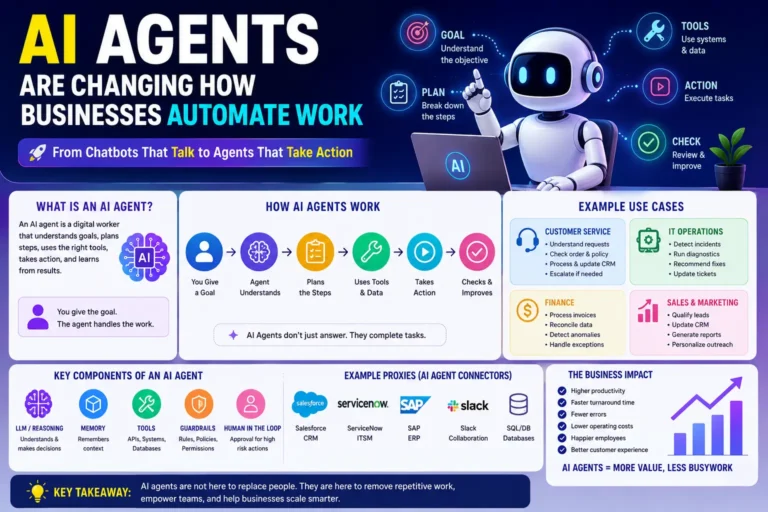
Artificial intelligence changes the relationship between people and technology. Instead of simply searching for information, people can ask an AI system to summarize it, explain it, compare it, transform it, challenge it or turn it into something new.
AI can become a writing partner, research assistant, coding helper, tutor, brainstorming partner, analyst and interface to other digital tools.
That means technology isn’t only changing the world around the individual. It can change the individual’s workflow, habits and relationship with information.
🧠 AI Is Changing How We Think
When people use AI regularly, they can change how they approach problems. Instead of beginning with a blank page, they can begin with a conversation. Instead of searching for an explanation for an hour, they can ask for one in simpler language. Instead of struggling with a problem alone, they can ask for possible approaches and then evaluate them.
The strongest AI users will not simply accept answers. They will question, verify and improve them.
💼 AI Is Changing How Individuals Work
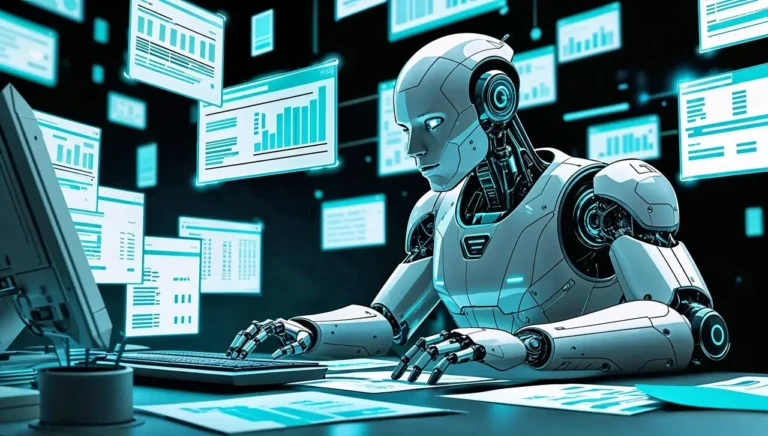
AI can help a single person draft documents, summarize information, generate ideas, analyze data, create plans, write code and automate parts of a workflow.
This does not mean every job disappears. In many cases, the nature of the job changes first.
| Before AI assistance | With AI assistance |
|---|---|
| Start from a blank document | Start with an outline or draft |
| Search information manually | Ask AI to organize information |
| Work alone on difficult tasks | Use AI as a second perspective |
📚 AI Is Changing How People Learn
The internet made information abundant. AI can make information interactive. A student can ask for different explanations, generate practice questions and receive feedback. A professional can ask for a complex technology to be explained with a practical example.
The opportunity is enormous because learning can become more personalized. But there is a trap: if AI always does the thinking, the user may learn less.
A better approach is to use AI as a coach: ask it to explain, try the problem yourself, ask it to critique your work, identify what you misunderstood and try again.
🎨 AI Is Changing Who Can Create
AI is lowering some barriers to creating content, designs, software, videos and prototypes. The advantage is shifting from simply knowing a particular software package toward knowing what to create, why it matters and how to direct AI effectively.
🧑🤝🧑 AI Is Changing Human Interaction With Technology
Traditional software relies on buttons, menus and commands. AI introduces another interface: conversation. Instead of learning where every feature lives, users can increasingly describe what they want.
That can make technology more accessible, but conversational systems also create a risk: a confident answer can sound correct even when it isn’t. AI literacy therefore becomes essential.
⚠️ The Risk: Becoming Dependent on AI
If people use AI for every decision, sentence and problem, they may gradually lose the habit of working through difficult problems themselves.
🔐 AI Will Also Change Digital Privacy
As AI becomes more useful, people may give it increasingly detailed information about their work, preferences and projects. Users should understand what an AI service stores, how connected tools work, what permissions are granted and when sensitive information should not be shared.
🚀 The Individual May Become More Powerful
The internet gave individuals access to a global audience. AI could give individuals access to something closer to a personal digital workforce.
A small business owner could use AI for research, customer communication and analysis. A creator could use it for ideation and production. A student could use it as a personalized tutor. A developer could use it as an additional engineering assistant.
AI does not automatically create success. But it can reduce the distance between an idea and its execution.
🌐 Internet Era vs AI Era
| Internet Era | AI Era |
|---|---|
| Information became accessible | Information becomes interactive |
| Search became faster | Reasoning and creation become assisted |
| Global communication expanded | Individual capability can expand |
| People learned digital tools | People learn to direct intelligent tools |
🧭 How Should Individuals Prepare?
- Learn AI basics. Understand strengths, weaknesses and hallucinations.
- Use AI on real problems. Practice beats collecting prompt lists.
- Develop judgment. Verify important answers.
- Protect your information. Think before sharing sensitive data.
- Keep human skills strong. Communication, creativity, critical thinking and decision-making remain valuable.
❓ Frequently Asked Questions
How is AI changing individuals?
AI is changing how individuals work, learn, create, research and interact with digital technology.
How is AI different from the internet?
The internet mainly expanded access to information and communication. AI can interact with information and help users analyze, create, reason and complete tasks.
Will AI make people smarter?
AI can help people learn and solve problems, but its effect depends on how it is used. Critical evaluation remains important.
Will AI replace human workers?
AI is likely to automate some tasks and change many jobs, but the impact will vary by occupation.
What skills are important in the AI era?
Critical thinking, communication, creativity, domain knowledge, problem-solving and AI literacy are increasingly valuable.
How can people avoid becoming dependent on AI?
Use AI for assistance rather than automatic decision-making, solve important problems yourself when appropriate and verify important information.
Will AI change education?
AI can make learning more interactive and personalized through explanations, practice exercises and feedback.
Is AI good or bad for society?
AI is neither automatically good nor bad. Its impact depends on how people build, deploy and use it, and how risks are managed.
🏆 The Bottom Line
The internet changed the world by connecting people to information, services and one another.
AI is beginning to change something more personal: how individuals interact with information, solve problems and turn ideas into action.
That does not make humans less important. It makes human judgment more important.
The internet connected the world. AI may amplify the individual.
Satya Pathak is the technology writer behind SkypeExchange4U, covering artificial intelligence, emerging technology, AI tools and practical technology guides.